

The Marshall Creek Habitat Offsetting Project in Abbotsford, BC was delivered as part of the Ministry of Transportation and Transit’s highway expansion program. The project focused on restoring and enhancing aquatic habitat to offset impacts associated with highway widening.
Milestone Environmental Contracting, in partnership with Sema:th (Sumas) First Nation through the Wochmel Milestone Joint Venture, completed restoration works across three sites along Marshall Creek. The project included invasive species removal, channel restoration, and riparian rehabilitation to improve fish habitat, bank stability, and ecological function.
Key works included the construction of a new off-channel habitat pond, enhancement of existing creek sections, and installation of large woody debris and in-stream features to increase habitat complexity. The project also included upgrades to an existing control weir to support fish passage and long-term hydrological performance.
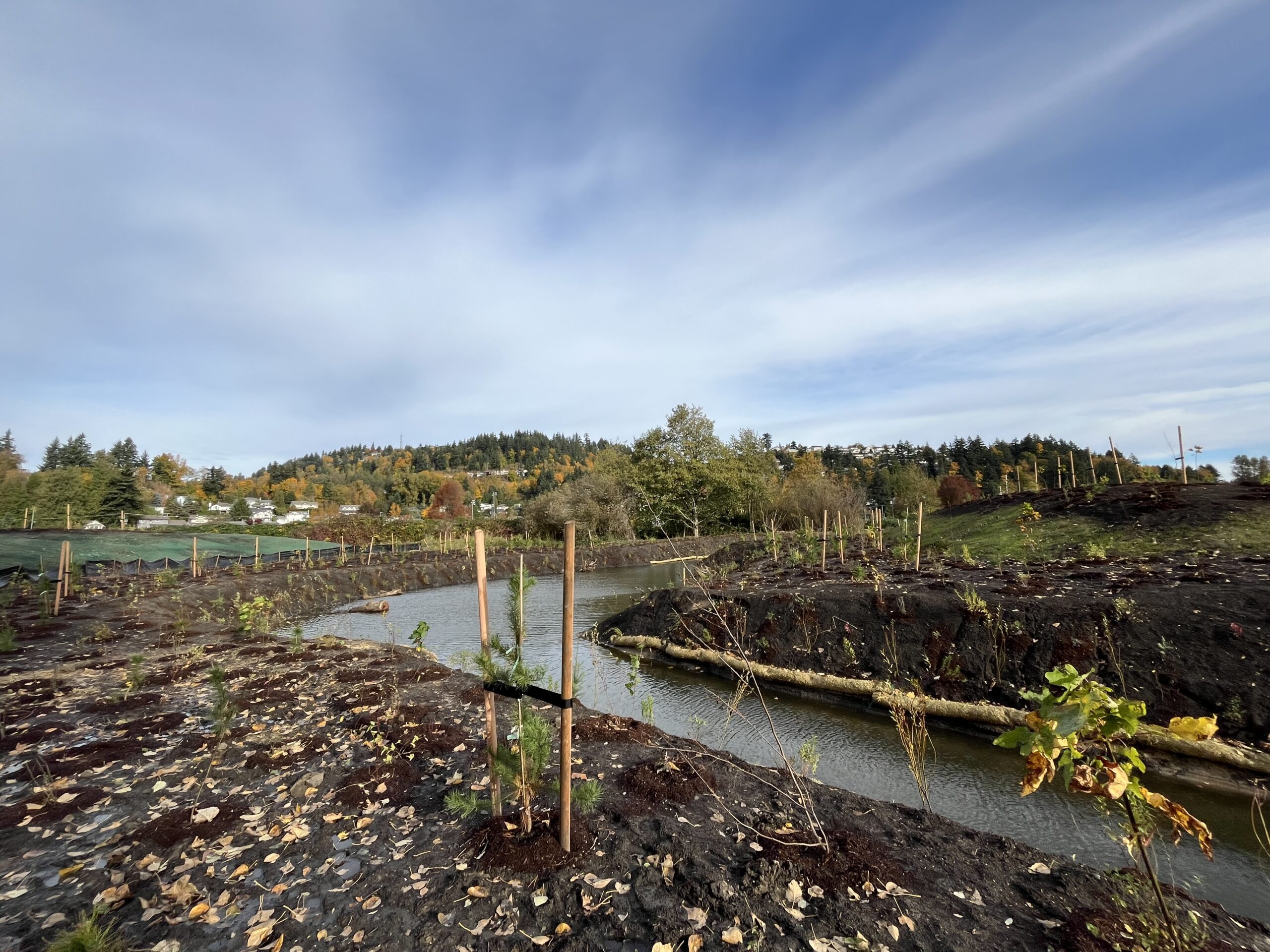
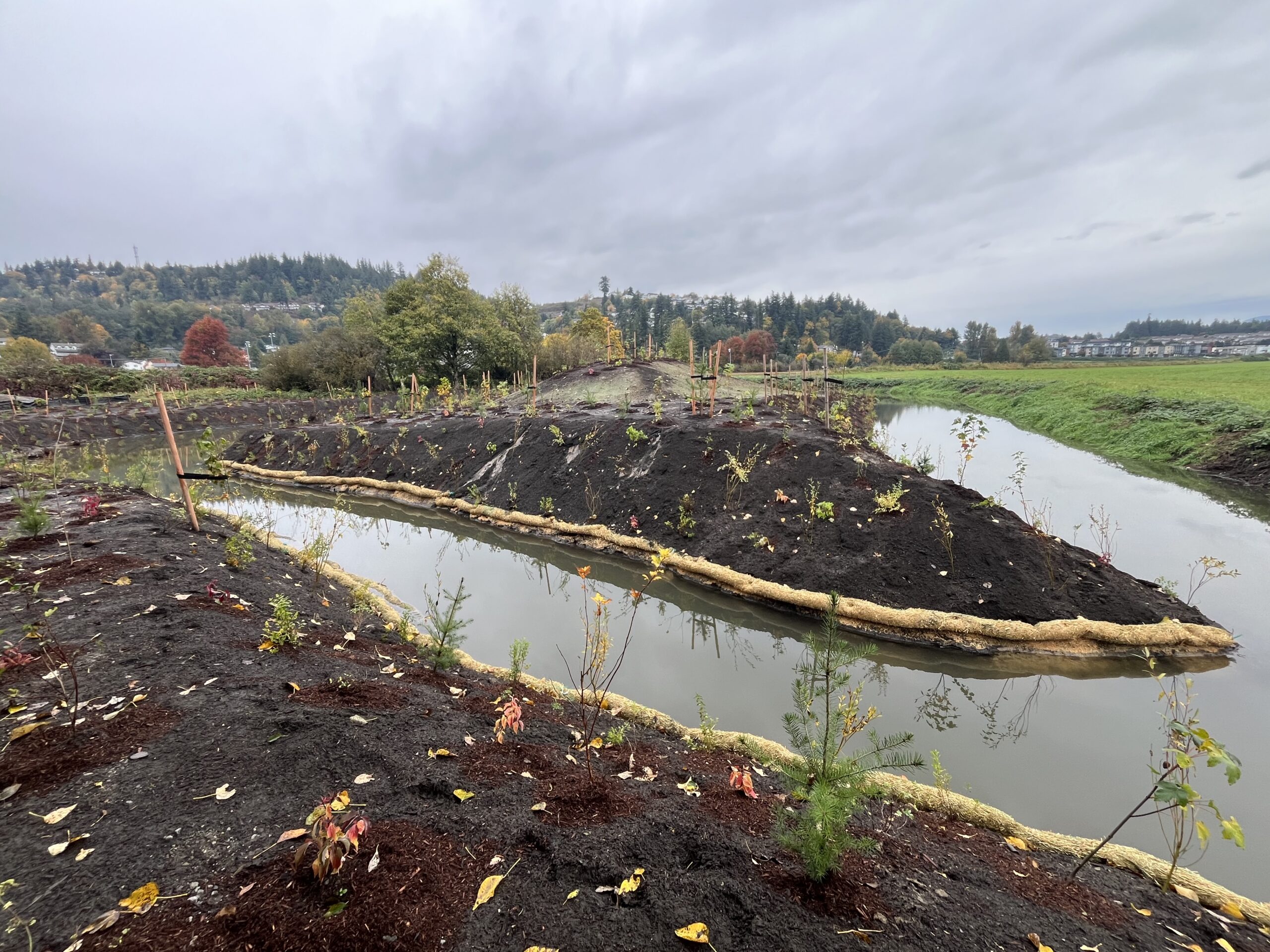
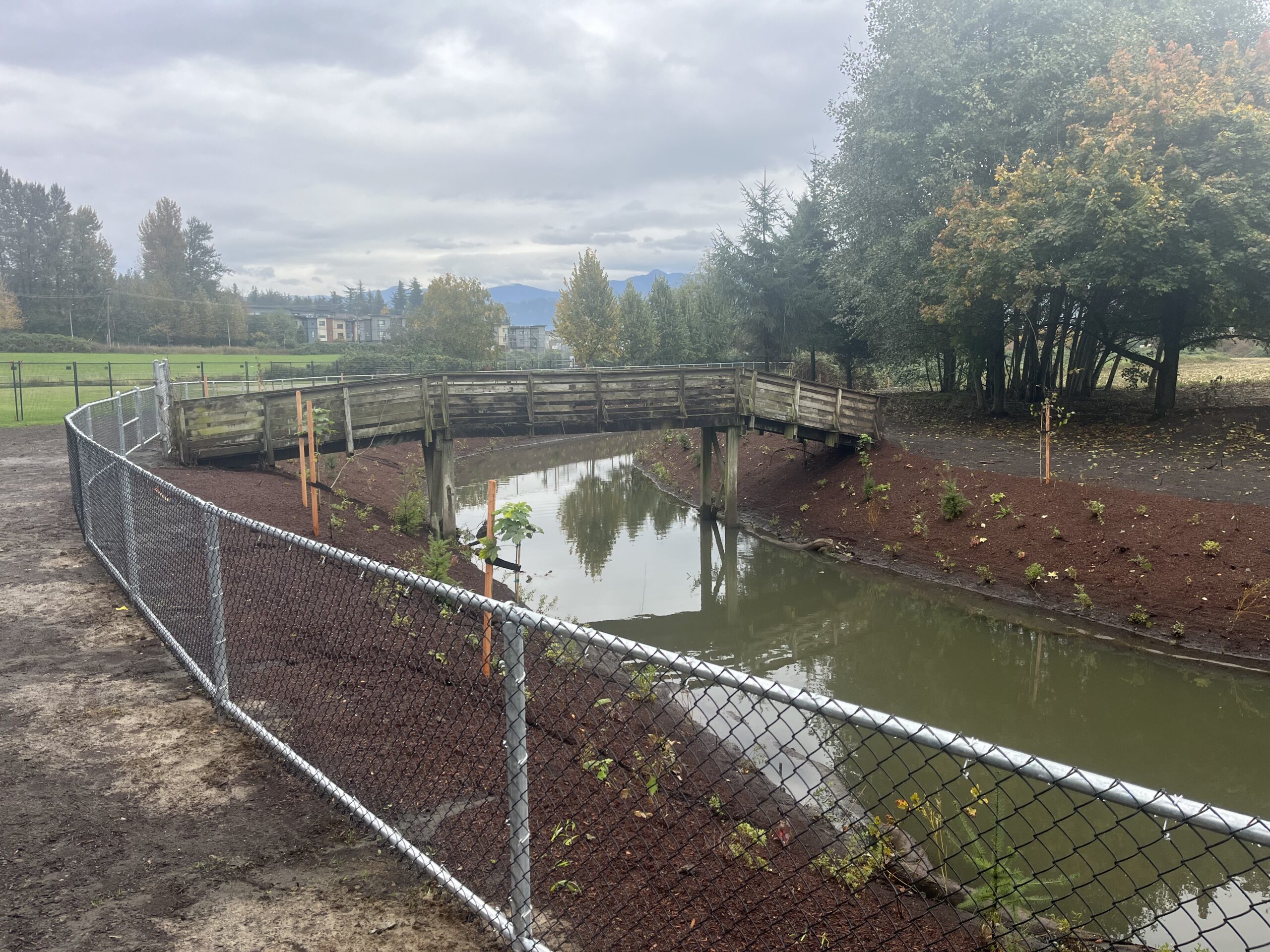
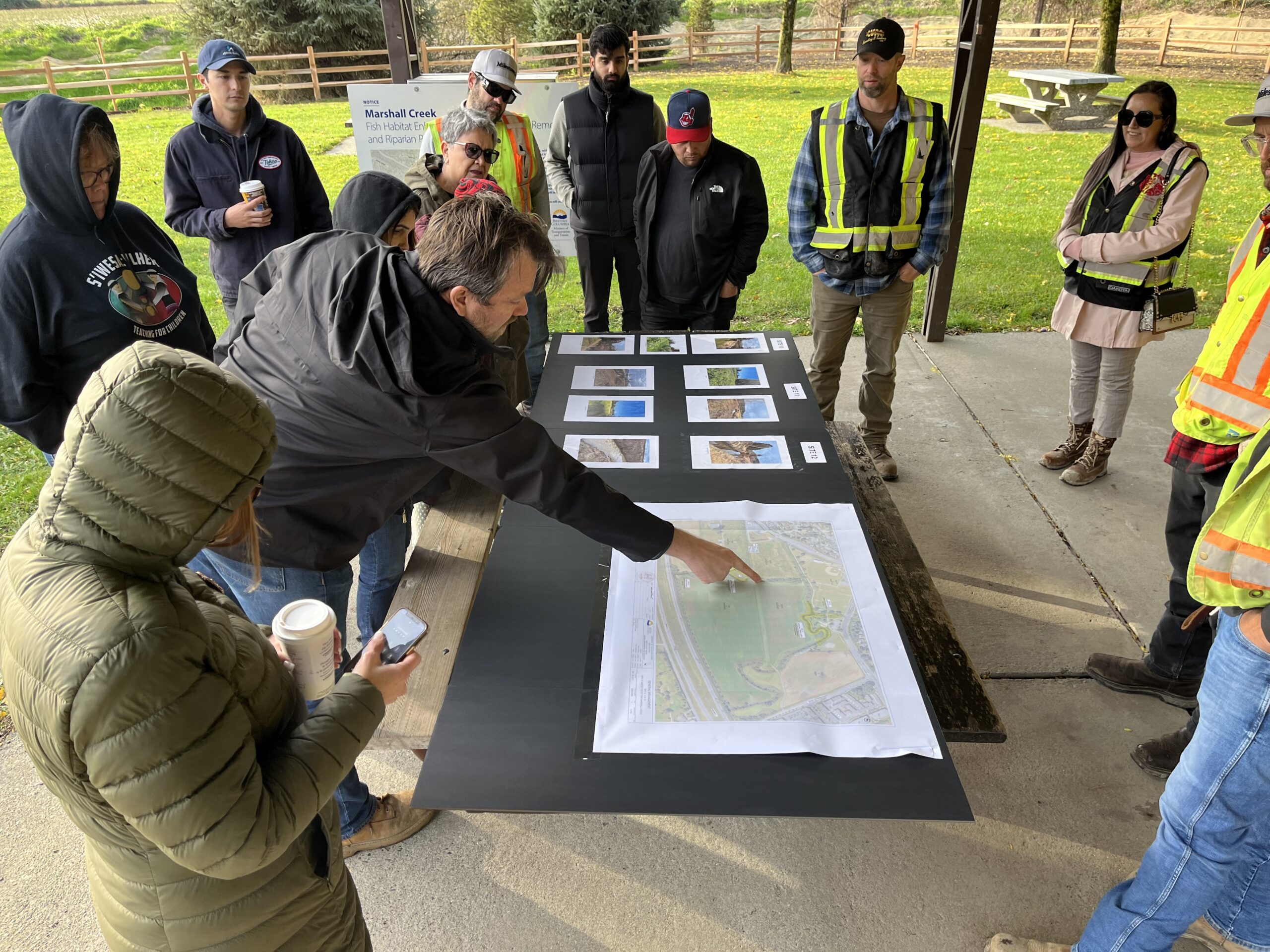
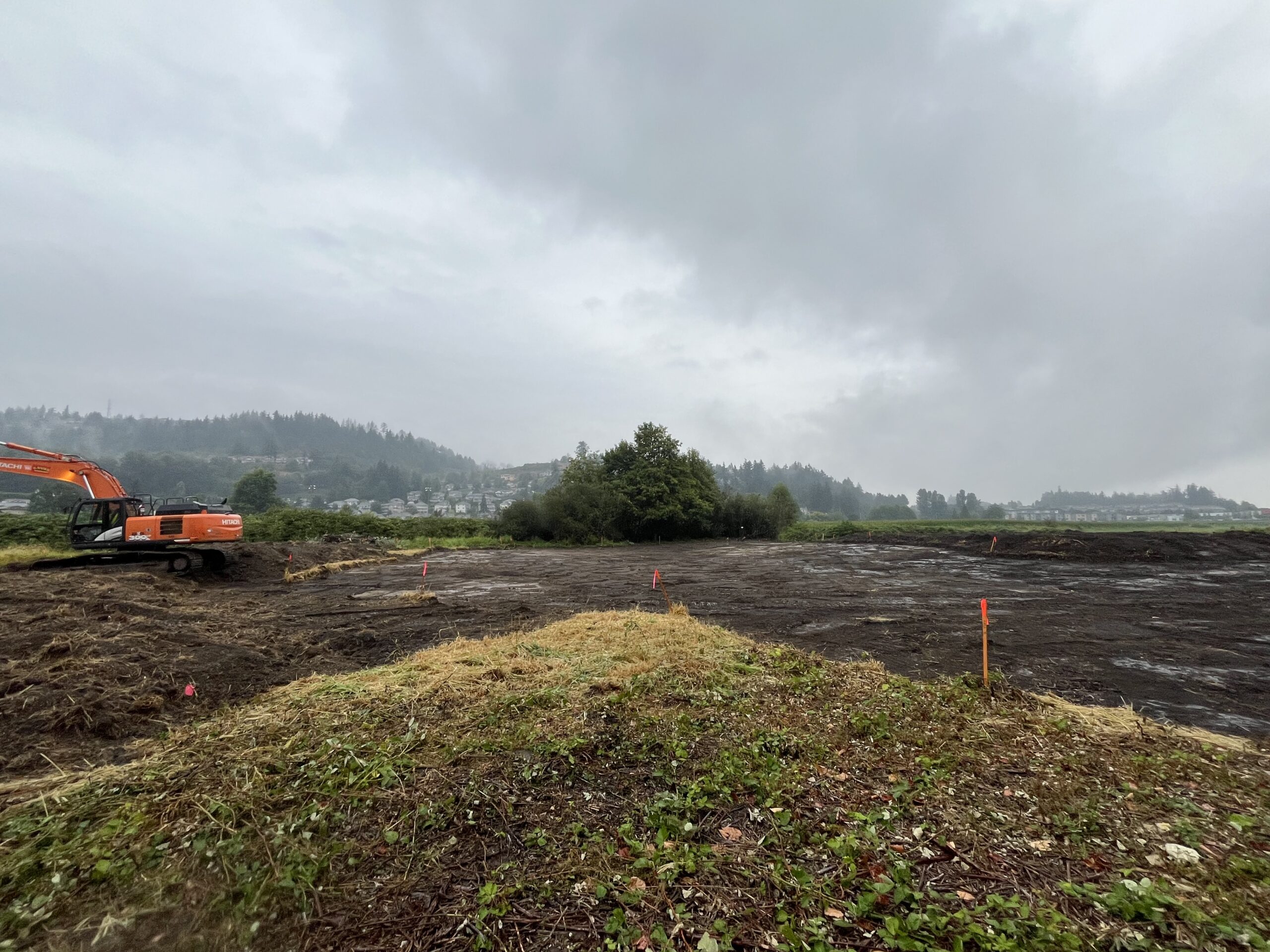
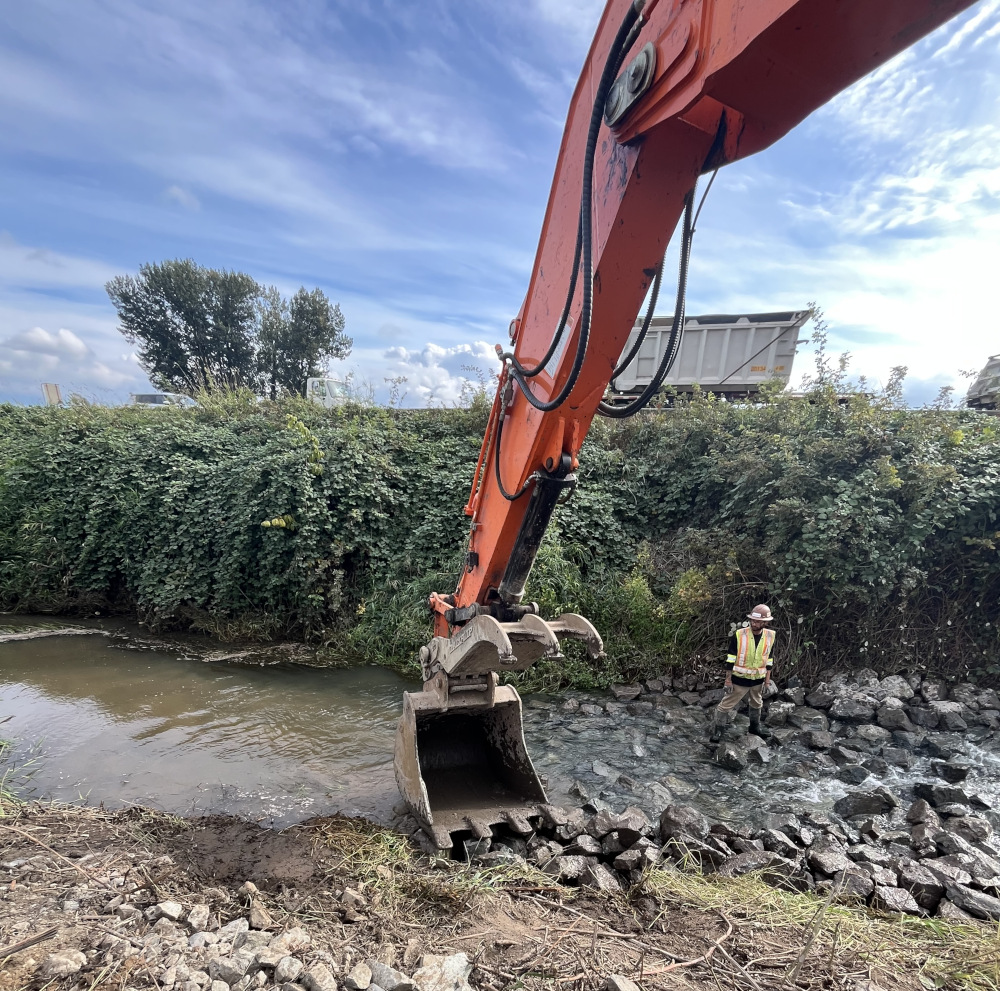
The scope of work included site survey, layout, and preparation across three project areas (Sites 10, 11, and 12), along with clearing and grubbing to remove invasive vegetation and root systems. Channel excavation and restoration works were completed to improve habitat complexity and establish functional riparian interfaces. The project also included construction of an off-channel rearing habitat pond and associated berms, installation of large woody debris and in-stream habitat features, and implementation of a temporary creek bypass system during construction. Additional works involved augmentation of an existing control weir to support fish passage and flow management, followed by riparian planting, topsoil placement, and revegetation using native species to restore long-term ecological function.
Milestone partnered with Sema:th (Sumas) First Nation through the Wochmel Milestone Joint Venture to deliver the project. Sema:th First Nation played an active role in securing the work and supporting project delivery.
Throughout construction, Sema:th First Nation provided on-site cultural monitoring to ensure the project aligned with Indigenous values, protocols, and the cultural significance of Sema:th Lands. Their involvement also included labour participation, supporting communication, knowledge sharing, and collaboration throughout the project.